



 Clients
Climate reductions you
can prove
The platform for PCFs and supplier collaboration.
Farm to shelf by default, full life cycle when you need it.
Trusted by industry leaders today and tomorrow
Sound familiar?
Six situations we hear every week
They have the same answer
- 1
Your SBTi report rests on spend factors
Spend factors cannot move when a supplier improves. Supplier-specific footprints can.
- 2
300 supplier PDFs, no way to tell which are true
Suppliers enter data into one model both sides can see. Nothing to vet.
- 3
Your emissions moved and you can’t say why
The Change Log splits every movement into real reductions and data changes.
- 4
A customer wants 50 footprints by Friday
Send the product list you already keep. Every product gets a benchmark footprint on day one, sharpened as your own data comes in.
- 5
Land emissions from crops you never grew
From 2027 they count. The request travels up the chain and origin comes back per raw material.
- 6
Your packaging data sits two tiers up
One request reaches the converter. Collected once, it builds the footprint and the PPWR file.
From the start
Covered from day one.
Current forever
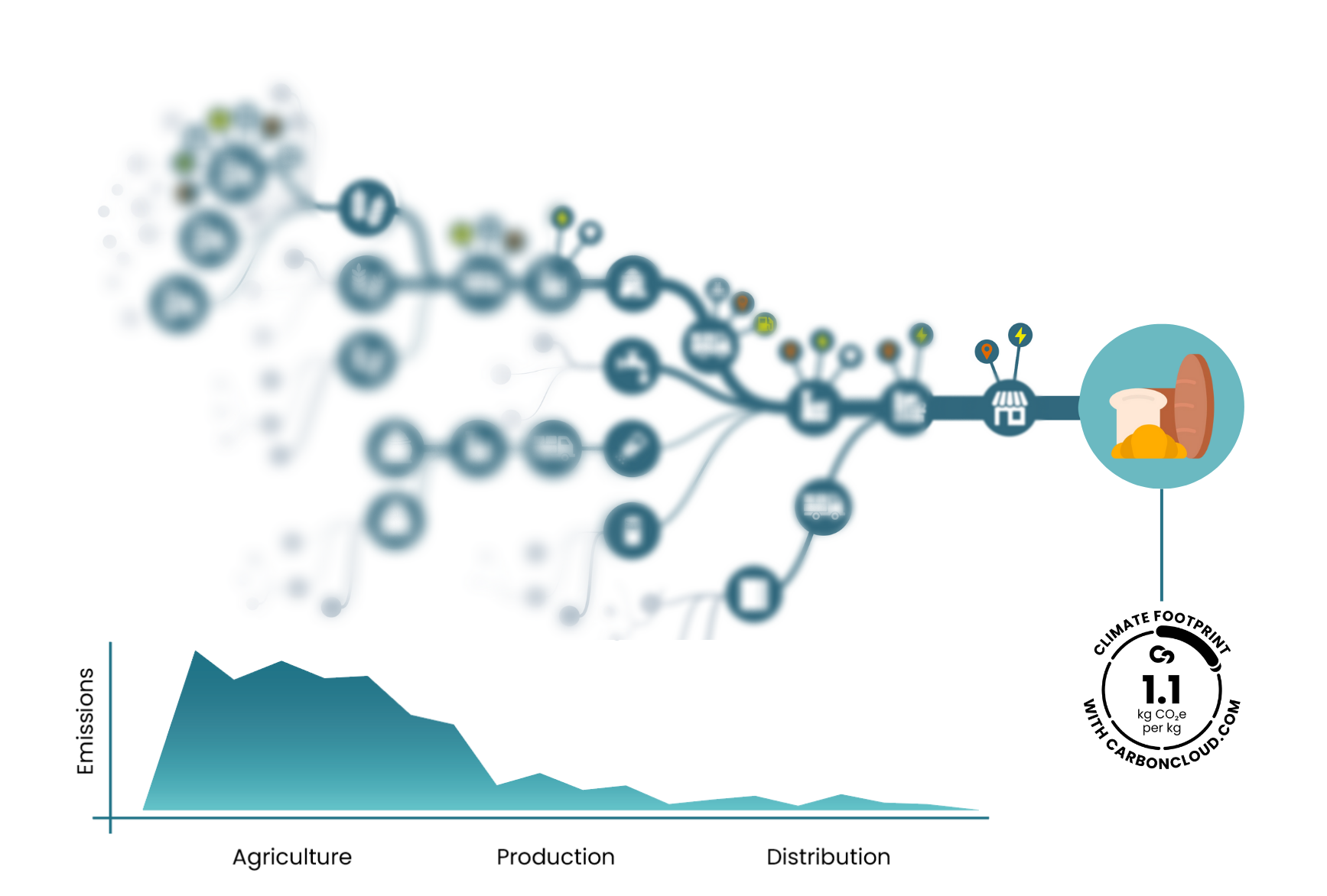
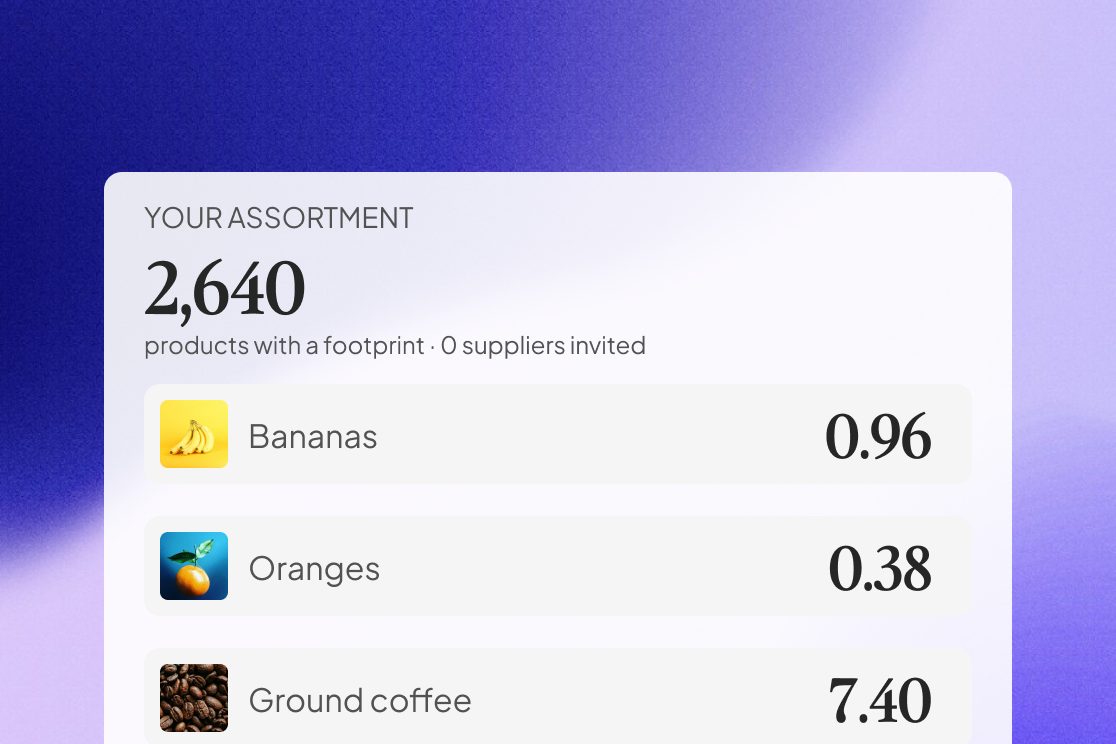
Your whole assortment is calculated before a single supplier is invited: around 20,000 farm-gate products in 192 countries, every emission factor our own, every breakdown built in. AI helps read your bill of materials; it never produces the number.
Three honest attempts.
Three dead ends
Averages
Stand still when a supplier improves, and move when the database does.
Unvetted claims
Hundreds of formats, methods unknown. Impossible to compare or check.
The standards treadmill
Every revision restates history. Keeping up is a job in itself.
Reductions can only come from the products you buy and sell. This was never an accounting problem. It is a collaboration problem.
How it works
Three conditions. No exceptions
Every programme hits the same three walls. A real solution has to get through all of them.
Three hundred supplier numbers, and no way to compare them.
One model, so every number can be compared
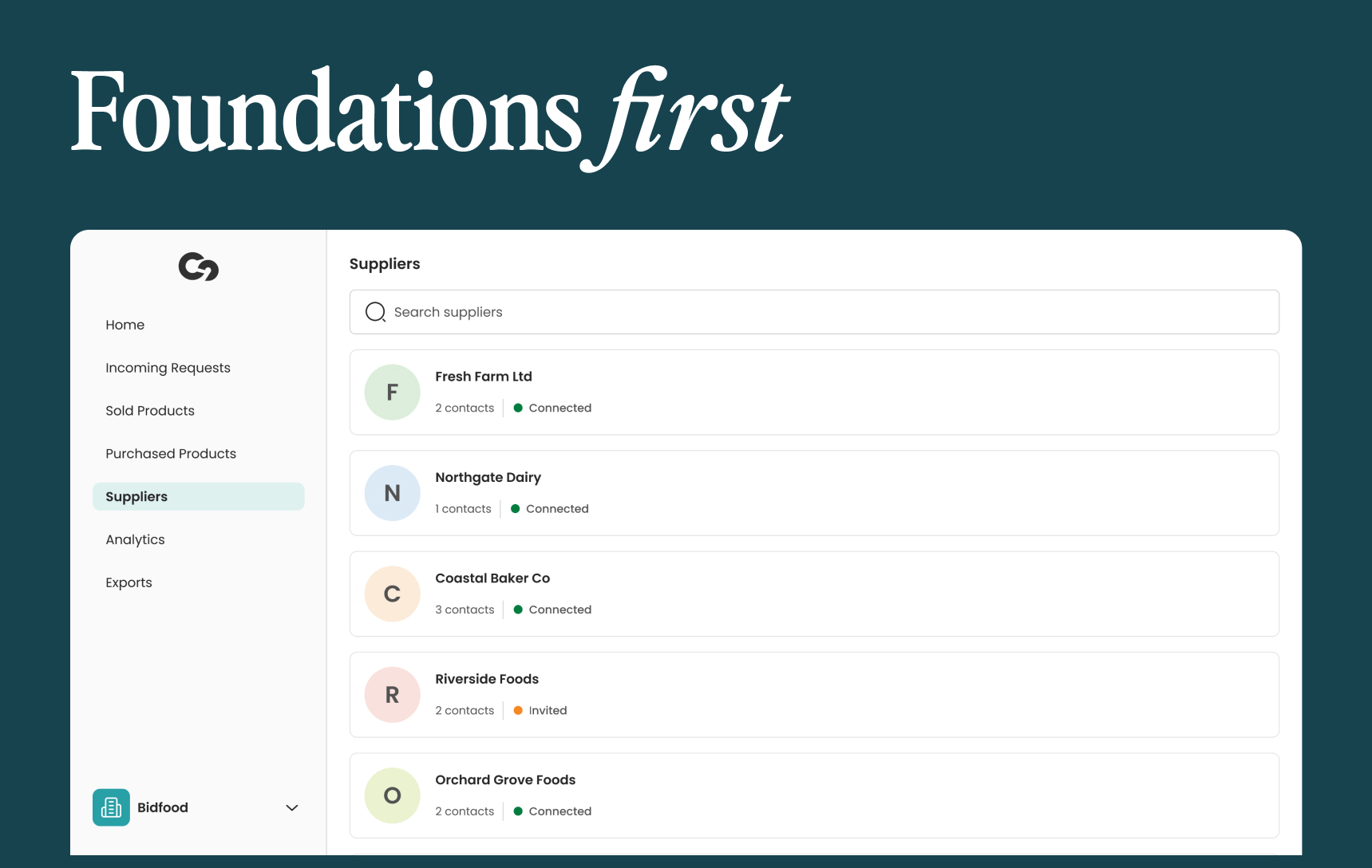
Suppliers do not send claims to check. They send data into the same model as your benchmark figures: same methods, same background data, for everyone.
Getting started looks like years of chasing suppliers before you have anything to show.
Covered from day one, so there is no cold start
Every product has a footprint before the first supplier is invited. You improve it supplier by supplier, and the Primary Data Share shows how far you have come.
Suppliers will not join a comparison they think is rigged, and without them nothing moves.
A race your suppliers can trust, so they join and stay
Free and private: results travel, never the recipe. The same data serves their own scope 3 and every customer, under the same rules for everyone.
Customer proof
Scope 3 is 97 percent of Bidfood's footprint. Here is how it starts to move
“Scope 3 is about 97% of our footprint, so nothing moves unless our suppliers move. We modelled our entire range in CarbonCloud before inviting a single supplier, so nobody arrived to a blank page, and each footprint only gets better as they add their own data. More than half of the first group connected within two weeks, and some are already bringing their own suppliers in behind them.”

Nathan Lyon
Head of Environmental Supply Chain Projects, Bidfood UK
How we do it
The trust triad
Three measures on every footprint, so you can decide on the number, not only report it.

Primary Data Share
How much of a footprint rests on your suppliers’ own data.

Data Quality Index
Every data point graded for precision, completeness and fit.

Change Log
Every movement split into real reductions and data improvements.
From proof to reductions
Proof is the beginning.
Reductions are the point
Once every footprint can be trusted, the questions change: where to act, what to try, who moves first.
- 1
Find
Hotspots per product, farm to shelf, and how much of each rests on real data.
- 2
Test
Try a new energy contract, origin or pack before anyone spends, in the same model as the reported number.
- 3
Coordinate
Agree with suppliers what changes, when, and how it will be counted.
- 4
Then reduce. On the record
The change shows up in the Change Log as a real reduction, on both sides of the transaction.
No replacement
Keep what works. Close the gap
CarbonCloud is the scope 3.1 and 3.4 layer, feeding the accounting and reporting you already keep.
The packaging data PPWR demands
Every component and material, traced to the company that made it. Collected once, it builds the footprint too.
The origin data the Land Sector and Removals Standard demands
From 2027, land emissions count by where each raw material was grown. Origin and volume per raw material, supplier by supplier, split the way the standard reports it.
Where do you start?

You buy
Retailers, wholesalers, food service, producers with a target
Pick one category. Every product in it has a footprint on day one. Invite the suppliers behind it and report your first provable reduction.
One platform for the whole inventory? Corporate footprint

You supply
Producers, importers, traders
Customers score tenders on footprints. Enter your data once and answer every customer, and your own targets, from the same dataset.
Footprints your customers can use? Product footprints
Standards we build to
- GHG Protocolincluding land sector and removals (LSRS)
- ISO 14067method in accordance, product footprints
- SBTi FLAGtarget setting and tracking
- PACTaligned PCF data exchange
Blog